
Box Breathing: How to Do It and What It Can—and Can’t—Do
Estimated reading time: 5 minutes
Key takeaways
- Box breathing uses four equal phases: inhale, hold, exhale, and hold. A comfortable four-second count is one possible starting point, not a rule.
- Keep each breath gentle, and shorten or skip the holds if they feel uncomfortable.
- It may help some people feel calmer in the moment, but the evidence is limited and mixed; it is not a guaranteed treatment or performance aid.
- Stop if you feel dizzy, breathless, panicky, or otherwise unwell, and seek medical advice if symptoms are concerning or don’t settle.
Table of contents
- Box Breathing: How to Do It and What It Can—and Can’t—Do
- Key takeaways
- Table of contents
- How to do box breathing
- What if the breath holds feel uncomfortable?
- What can box breathing help with?
- When to try it—and how to keep it low-pressure
- Box breathing and prolonged-exhalation breathing
- A simple next step
- FAQ
- How long should you count for each phase?
- What should you do if holding your breath feels uncomfortable?
- Is box breathing a proven treatment for anxiety?
How to do box breathing
Box breathing is a paced-breathing exercise: inhale, hold, exhale, hold, keeping all four parts the same length. A comfortable four-second count is a common place to start, but it isn’t a rule. If holding your breath feels strained, shorten the count or skip the holds.
People often use box breathing when they’re nervous before a meeting, feeling keyed up, or looking for a brief pause in a busy day. It may help some people feel calmer in the moment, but the evidence is limited and mixed. It isn’t a guaranteed way to stop anxiety, improve performance, or treat a mental health condition.
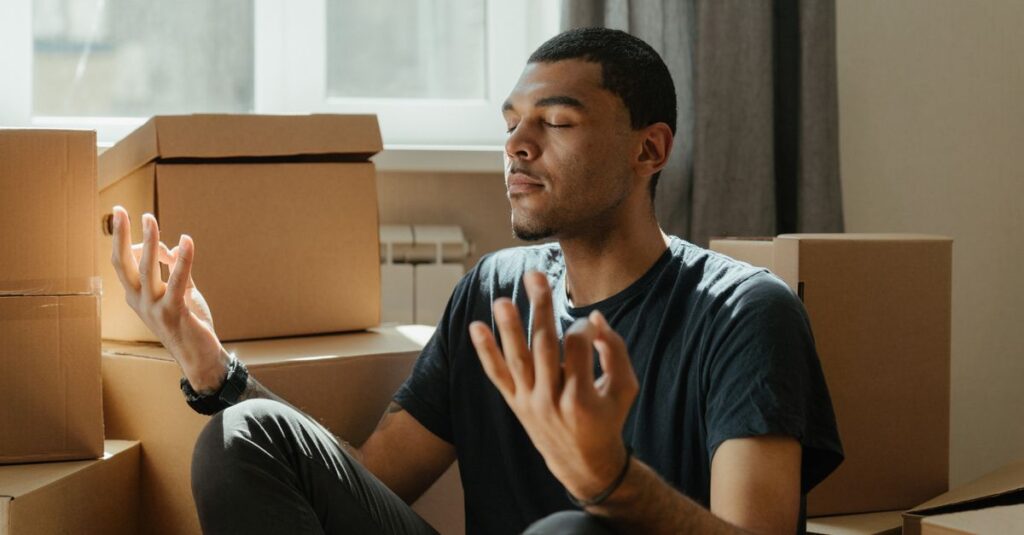
You can practice sitting or standing somewhere comfortable. Let your shoulders rest, and keep each breath gentle rather than unusually deep.
- Breathe in for a comfortable count, such as four seconds.
- Hold gently for the same count. Don’t clamp your throat or brace your body.
- Breathe out gently for the same count.
- Pause after the exhale for the same count.
- Repeat for a few cycles if it still feels comfortable.
The four stages form the sides of the “box.” You may also hear the exercise called square breathing or four-square breathing.
You don’t need to force a perfectly even breath. If a four-second inhale leaves you short of air, try a shorter count for every phase. The pattern matters more than reaching a particular number. Research protocols vary, and the available evidence doesn’t establish one ideal count for everyone.
Practice somewhere safe and quiet enough to pay attention to your breathing. Don’t use the exercise while driving or operating machinery: focusing on a breathing pattern or becoming light-headed could be unsafe.
What if the breath holds feel uncomfortable?
You don’t have to push through them. Try shortening each phase, or leave out the holds and breathe gently in and out at a steady pace. That changes the exercise, but comfort matters more than completing the pattern exactly.
If focusing on your breathing makes you feel panicky, return to ordinary breathing and shift your attention to something around you. You could notice your feet on the floor or name a few objects in the room. Stop the exercise if you feel dizzy, breathless, panicky, or otherwise unwell. If symptoms are concerning or don’t settle, seek medical advice.
General breathing guidance from the NHS recommends a comfortable position and gentle, regular breathing rather than forcing deep breaths. That guidance covers breathing exercises for stress, not box breathing specifically. If the holds don’t suit you, NHS Inform’s controlled-breathing exercise offers another approach: counting while breathing in and out without requiring the box pattern.
What can box breathing help with?
The most careful way to describe box breathing is as a brief self-regulation technique that may help some people feel calmer during or after acute stress. It gives you a simple rhythm to follow and a short task to focus on. How it feels will vary from person to person.
In one randomized trial, 66 participants were assigned to normal breathing, box breathing, or prolonged-exhalation breathing before a simulated stress task. Compared with normal breathing, the two breathing exercises were associated with lower heart rate, self-reported anxiety, and salivary alpha-amylase after the task. The groups did not differ significantly in heart-rate variability, cortisol, or cognitive performance. The results suggest possible short-term effects in that particular setting; they don’t show that box breathing prevents stress or improves everyday performance. Read the trial.
A systematic review of randomized trials also describes a limited and varied evidence base. Some studies found short-term changes in perceived stress, anxiety, mood, or physiological measures, while results overall were inconsistent. Studies used different protocols and populations, and long-term effects remain uncertain.
That means box breathing may be worth trying as one optional coping tool, but it shouldn’t be treated as a proven therapy for anxiety or a substitute for professional support. Evidence that paced breathing in general can be useful doesn’t establish that the box pattern is better than other breathing exercises.
When to try it—and how to keep it low-pressure
You might try a few comfortable cycles before a stressful meeting, while waiting for an appointment, or during a quiet break. The goal isn’t to make yourself calm on command. It’s simply to pause and follow a steady rhythm; afterward, return your attention to what you were doing.
If you’re new to the exercise, try it once when you’re already relatively settled. That gives you a chance to see whether the counting and holds feel comfortable before using it during a stressful moment. There’s no research-based schedule or required number of cycles in the supplied evidence, so you don’t need to set a strict daily target.
A few common habits can make the exercise less comfortable:
- Taking very deep or forceful breaths. Keep the breaths gentle. Bigger breaths aren’t necessarily better.
- Treating four seconds as mandatory. Shorten the count if needed; a strained pattern defeats the purpose of a comfortable pause.
- Holding rigidly. The holds should be gentle. If they create discomfort, shorten or remove them.
- Expecting instant calm. You may notice a change, or you may not. The evidence doesn’t support a guaranteed result.
- Using it as the only response to persistent anxiety. If anxiety is severe, ongoing, or interfering with daily life, consider speaking with a qualified health professional rather than relying on a breathing exercise alone.
Box breathing and prolonged-exhalation breathing
Both techniques use a paced breathing rhythm, but they differ in timing. Box breathing gives equal time to inhaling, holding, exhaling, and holding again. Prolonged-exhalation breathing makes the exhale longer than the inhale.
In the trial described above, both approaches showed some short-term differences from normal breathing after a simulated stress task, but neither was shown to work better for everyone. If equal holds feel awkward, you might prefer a gentler pattern without holds. The practical choice is the one you can do comfortably—not the one with the most appealing name or a supposedly perfect count.
A simple next step
At a calm moment, try a few gentle cycles with a shorter count than four if that feels more natural. Notice whether the pattern helps you pause, does nothing in particular, or feels uncomfortable. If it doesn’t suit you, return to ordinary breathing or try a controlled-breathing approach without holds.
FAQ
How long should you count for each phase?
A comfortable four-second count is a common place to start, but it isn’t a rule. If that leaves you short of air or feels strained, try a shorter count for every phase. The available evidence doesn’t establish one ideal count for everyone.
What should you do if holding your breath feels uncomfortable?
Try shortening each phase or leave out the holds and breathe gently in and out at a steady pace. Stop if you feel dizzy, breathless, panicky, or otherwise unwell.
Is box breathing a proven treatment for anxiety?
No. It may help some people feel calmer in the moment, but the evidence is limited and mixed. It shouldn’t be treated as a proven therapy for anxiety or a substitute for professional support.